

A website can look beautiful but still be difficult to use. It can also offer excellent functionality but fail to capture visitors’ attention. This is where UI vs UX design becomes an important consideration for businesses that want to build effective websites.
UI (User Interface) design focuses on the visual elements people interact with, while UX (User Experience) design focuses on how people feel and what they experience when using a website. Both disciplines work together to create websites that are attractive, intuitive, and useful.
For startups, founders, and service-based businesses, understanding the difference between UI and UX can help you make better design decisions, improve customer satisfaction, and turn more visitors into leads or customers.
In this guide, we will explain how UI and UX differ, why they matter, and how you can apply both principles to build a better business website.
Want to improve your website’s design and usability? Explore the website development and design services at mshoaib.site to discover how a thoughtful approach can support your business goals.
What Is UI Design?
User Interface (UI) design refers to the visual and interactive elements of a digital product. It determines how a website looks and how users interact with its components.
When visitors land on your website, they immediately notice its layout, colors, typography, images, buttons, and overall visual presentation. These elements are all part of UI design.
The goal of UI design is to make the interface visually appealing, consistent, accessible, and easy to understand.
Key Elements of UI Design
A well-designed user interface typically includes:
- Typography: Readable fonts, appropriate font sizes, and clear heading styles.
- Color schemes: Colors that reflect the brand and provide sufficient contrast.
- Buttons and calls to action: Clearly visible elements that guide visitors toward relevant actions.
- Layout and spacing: A balanced arrangement of text, images, and interactive elements.
- Icons and illustrations: Visual elements that communicate information efficiently.
- Responsive design: Interfaces that adapt to desktops, tablets, and mobile devices.
- Visual consistency: Repeated design patterns that make the website feel cohesive.
For example, a consulting company’s website might use a professional color palette, readable typography, clear service cards, and a prominent “Book a Consultation” button.
These design decisions help visitors understand the brand and identify the next step.
However, an attractive interface alone cannot guarantee a good experience. If the booking process is confusing or important information is difficult to find, visitors may still leave.
What Is UX Design?
User Experience (UX) design focuses on the overall experience people have when interacting with a website, application, or digital product.
Rather than concentrating primarily on appearance, UX design considers users’ needs, expectations, challenges, and goals.
A UX designer asks questions such as:
- Can visitors find the information they need quickly?
- Is the navigation logical?
- Can users complete important tasks without confusion?
- Does the website work well on different devices?
- Are forms simple enough to complete?
- What obstacles might prevent users from becoming customers?
The answers help shape a website that works effectively for its intended audience.
Key Elements of UX Design
UX design often involves several interconnected activities:
- User research: Understanding the target audience, behaviors, and expectations.
- Information architecture: Organizing website content into a logical structure.
- User journeys: Mapping the steps visitors take to complete specific tasks.
- Wireframing: Planning page structure before applying detailed visual styling.
- Usability testing: Observing how people interact with a website and identifying problems.
- Accessibility: Making content and functionality usable by people with different abilities.
- Performance and responsiveness: Helping users access content efficiently across devices and network conditions.
Consider an online service business that wants visitors to request a quote.
UX design helps determine what information visitors need before contacting the company, which fields belong in the form, where the form should appear, and how the submission process should work.
A well-planned experience reduces unnecessary friction and makes it easier for potential customers to take action.
UI vs UX Design: What Is the Difference?
The primary difference between UI and UX design is their focus.
UI design focuses on the interface users see and interact with. UX design focuses on the overall experience users have while completing their goals.
Although their responsibilities differ, UI and UX are closely connected. Both contribute to a website that meets user needs and business objectives.
UI vs UX Design Comparison
| Aspect | UI Design | UX Design |
|---|---|---|
| Primary focus | Visual appearance and interaction elements | Overall usability and user experience |
| Main question | Does the interface look clear and work consistently? | Can users achieve their goals easily? |
| Key activities | Styling, typography, colors, buttons, layouts | Research, user journeys, wireframes, testing |
| Common deliverables | Visual mockups, design systems, interface components | User flows, research findings, wireframes, test results |
| Success indicators | Visual consistency, readability, interface clarity | Task completion, usability, user satisfaction |
| Business contribution | Builds brand recognition and visual credibility | Reduces friction and supports customer journeys |
A Practical Example of the Difference Between UI and UX
Imagine a company that provides accounting services to small businesses.
Its website features an attractive homepage with professional photography, polished typography, and colorful service cards. These are examples of UI design.
However, visitors cannot easily find pricing information, the contact form requests too many details, and the navigation makes it difficult to locate specific services.
These are UX problems.
Improving the interface might involve refining the colors, adjusting the spacing, and making buttons more prominent. Improving the experience could involve simplifying navigation, organizing services more logically, and reducing unnecessary form fields.
The strongest solution addresses both sets of problems.
[Image: Side-by-side comparison of a cluttered website and an improved, easy-to-navigate website. Alt text: Difference between UI and UX design illustrated through website usability improvements]
Why UI and UX Design Matter for Business Websites
Your website often serves as a potential customer’s first interaction with your business. Its design can influence how visitors perceive your company and whether they feel confident enough to explore your services.
That is why effective UI UX design for websites should be treated as a business investment rather than a purely visual exercise.
1. They Help Build Trust and Credibility
Visitors may judge a business by the quality of its website.
Inconsistent styling, broken layouts, outdated information, and confusing navigation can undermine confidence. A polished interface combined with a reliable user experience helps communicate professionalism.
For businesses that depend on inquiries, consultations, or online sales, this initial impression can influence whether visitors continue engaging with the brand.
2. They Make Websites Easier to Use
A website should help visitors find answers without unnecessary effort.
Clear menus, descriptive headings, readable text, and predictable page layouts make information easier to navigate.
Good UX also ensures that visitors can complete common tasks, such as finding a service, comparing options, or submitting an inquiry, without getting stuck.
3. They Can Support Higher Conversion Rates
A conversion occurs when a visitor completes a desired action, such as requesting a quote, booking a consultation, subscribing to a newsletter, or purchasing a product.
UI and UX improvements can remove barriers that prevent visitors from taking these actions.
For example, a service page may benefit from:
- A clear headline explaining the value of the service.
- A visible call-to-action button.
- Concise descriptions of benefits.
- Testimonials or other credible evidence.
- A simple contact form.
- A consistent experience across mobile and desktop devices.
These changes do not guarantee higher conversions, but they can make the path to conversion clearer and easier.
4. They Improve the Mobile Experience
Many visitors browse business websites using smartphones.
If text is too small, buttons are difficult to tap, or important content extends beyond the screen, users may become frustrated.
Responsive UI design adapts the interface to different screen sizes, while UX design ensures that important tasks remain practical on mobile devices.
Both are essential when designing websites for customers who expect a convenient experience wherever they browse.
5. They Can Complement SEO Efforts
SEO helps potential customers discover your website through search engines. UI and UX help those visitors navigate the content once they arrive.
A website with logical navigation, descriptive headings, accessible content, and a clear structure can support both usability and search engine understanding.
Page speed and mobile usability also matter to visitors and can contribute to Google’s page experience signals.
However, attractive UI and good UX alone do not guarantee rankings. Search visibility also depends on factors such as content relevance, technical SEO, competition, and backlinks.
For businesses, the objective is to combine discoverability with usability so that attracting visitors is only the beginning of a successful customer journey.
How UI and UX Work Together in the Design Process
UI and UX are not competing approaches. They are complementary parts of an effective website design process.
UX decisions help establish the structure and functionality of a website, while UI decisions determine how that structure is presented and how users interact with it.
A typical process involves the following stages.
Step 1: Understand the Business and Its Audience
Before designing pages, identify the website’s primary purpose.
Is it intended to generate leads, sell products, explain services, or build brand awareness?
Understand the target audience, their expectations, and the questions they need answered.
For example, a local accounting firm may prioritize service explanations, pricing guidance, professional credentials, and appointment booking.
Step 2: Plan the Structure and User Journey
Organize the website so visitors can move naturally from one section to another.
Create a sitemap, plan navigation labels, and identify the most important user journeys.
For a service website, a common journey might look like this:
- A visitor discovers the business through search.
- They read a service page.
- They review testimonials or case studies.
- They visit the contact page.
- They submit an inquiry.
Each step should provide enough information to make the next step feel natural.
Step 3: Create Wireframes
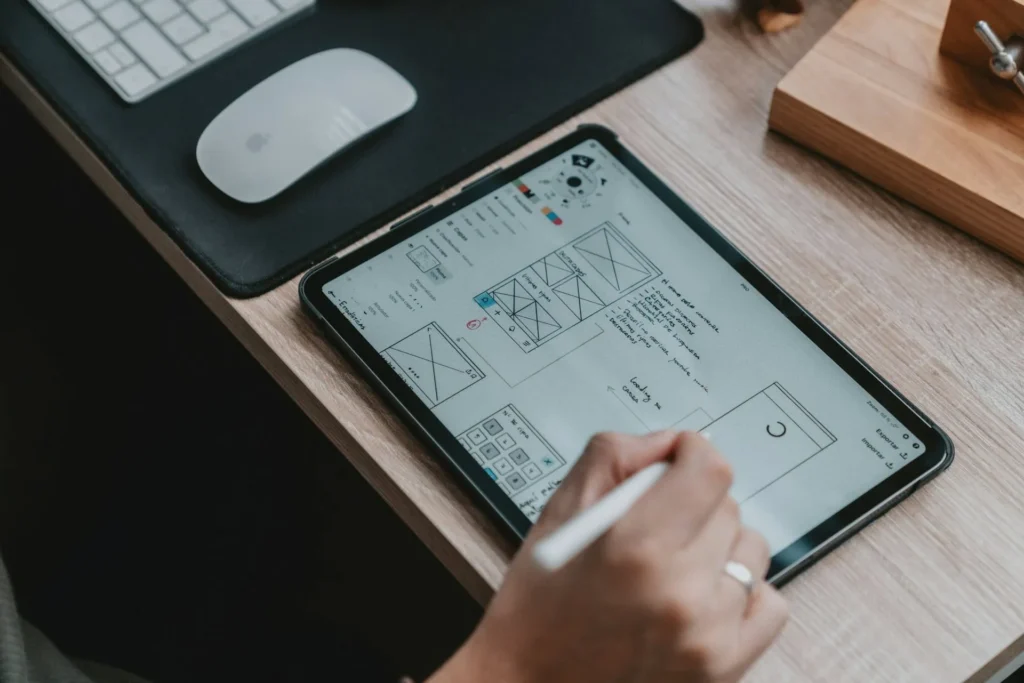
Wireframes outline the structure of a page without requiring a fully developed visual design.
They help determine where headings, content sections, images, forms, and buttons should appear.
This stage makes it easier to identify structural problems before investing time in detailed styling.
Step 4: Develop the Visual Interface
Once the structure is clear, apply the visual design.
Choose typography, colors, spacing, imagery, button styles, and reusable interface components that align with the brand.
The design should make important information easy to scan and important actions easy to recognize.
Step 5: Build and Test the Website
Implement the design using an appropriate platform and test it across devices and browsers.
Check navigation, forms, interactive elements, readability, accessibility, and performance.
For WordPress websites, this also means checking theme compatibility, responsive layouts, plugin behavior, and whether the design remains consistent across templates.
Step 6: Improve Based on Real User Behavior
Website design should not end at launch.
Review analytics, collect customer feedback, monitor form submissions, and identify pages where visitors struggle.
Use this information to prioritize improvements instead of making design changes based solely on personal preference.
Need a website that combines visual quality with practical functionality? Explore WordPress development services to learn how a well-planned design and development process can support your business goals.
Practical UI and UX Improvements You Can Make Today
You do not always need a complete website redesign to improve the user experience. Small, targeted changes can make important tasks easier.
Simplify Your Navigation
Use clear, familiar labels such as “Services,” “About,” “Pricing,” and “Contact.”
Avoid overcrowding the main menu with too many options. Group related pages together and make important sections easy to locate.
Make Calls to Action Clear
Every important page should have a clear next step.
Instead of using vague button text such as “Click Here,” choose action-oriented labels that explain what happens next.
Examples include:
- Request a Quote
- Book a Consultation
- View Our Services
- Get Started
Use a visual style that makes these buttons noticeable without overwhelming the page.
Improve Readability
Break long paragraphs into shorter sections, use descriptive subheadings, and maintain sufficient contrast between text and background colors.
Choose font sizes that remain comfortable to read on mobile devices.
Avoid using multiple font styles or decorative elements that make content harder to scan.
Reduce Form Friction
Only request information that is necessary for the next step.
If a visitor wants to request a consultation, a short form asking for their name, email address, and a brief message may be sufficient.
Explain any required fields and display helpful error messages when something is missing.
Check Mobile Usability
Open your website on an actual smartphone and test the most important tasks.
Check whether:
- The navigation is easy to open and use.
- Text remains readable without zooming.
- Buttons are easy to tap.
- Forms fit comfortably on the screen.
- Images and layouts do not overflow.
- Important content appears in a sensible order.
Use Accessibility Best Practices
Designing for accessibility improves usability for a broader range of visitors.
Use appropriate heading structures, meaningful link text, sufficient color contrast, descriptive image alt text, and keyboard-accessible controls.
Do not rely on color alone to communicate important information.
Common UI and UX Design Mistakes to Avoid
Even attractive websites can create poor experiences when design decisions prioritize appearance over usability.
Watch out for these common mistakes:
Prioritizing trends over users. Animations, unusual navigation patterns, and decorative effects should support the experience rather than distract from important tasks.
Ignoring mobile visitors. A design that works well on a desktop may become difficult to navigate on a smaller screen.
Using unclear messaging. Visitors should quickly understand what your business offers, who it serves, and what they can do next.
Adding unnecessary complexity. Too many pop-ups, form fields, menu options, and competing calls to action can create friction.
Skipping usability testing. Assumptions about what users find intuitive may not reflect how people actually interact with a website.
Treating launch as the finish line. Customer expectations and business needs change. Regular evaluation helps keep the website useful and relevant.
How to Measure the Success of UI and UX Improvements
The best way to evaluate design improvements is to connect them to specific user needs and business objectives.
Start by establishing a baseline before making major changes. Then compare relevant metrics after the changes have been implemented, allowing enough time and traffic to draw meaningful conclusions.
Useful indicators include:
- Conversion rate: The percentage of visitors who complete a desired action.
- Form completion rate: The percentage of users who successfully submit a form after starting it.
- Task completion rate: The percentage of users who successfully complete a defined task during testing.
- Navigation behavior: Whether visitors can locate key pages and information.
- User feedback: Comments, surveys, and usability testing observations.
- Core Web Vitals: Metrics that help assess loading performance, responsiveness, and visual stability.
No single metric tells the whole story. For example, a longer session might indicate meaningful engagement, but it could also mean that visitors are struggling to find information.
Combine quantitative data with user feedback to understand what is working and what needs improvement.
Looking to improve your website’s visibility as well as its user experience? Explore SEO services and website optimization to identify opportunities to strengthen your content, technical performance, and customer journey.
Frequently Asked Questions
1. What Is the Main Difference Between UI and UX Design?
UI design focuses on the visual interface and its interactive elements, including colors, typography, buttons, and layouts. UX design focuses on the overall experience, including usability, navigation, user needs, and how easily people accomplish their goals.
2. Is UI or UX Design More Important for a Website?
Neither is universally more important. UX helps ensure the website works effectively for its audience, while UI makes the interface clear, consistent, and visually appealing. Most business websites benefit from combining both.
3. Can a Website Have Good UI but Poor UX?
Yes. A website can look polished and professional but still be difficult to navigate, slow to use, or confusing. Good visual design does not automatically make a website easy to use.
4. How Does UI UX Design Benefit Small Businesses?
Effective UI UX design can help small businesses communicate their value, build credibility, simplify customer journeys, and make it easier for visitors to contact them or purchase their services. Results depend on the quality of implementation and the needs of the target audience.
5. How Often Should a Business Website’s UI and UX Be Reviewed?
Review your website regularly and whenever you introduce major changes to your services, audience, or business goals. Analytics, customer feedback, usability testing, and performance reports can help determine when improvements are needed.
Conclusion: Build a Website That Looks Good and Works Well
Understanding UI vs UX design helps businesses make smarter decisions about their websites.
UI design creates the visual interface that visitors see and interact with. UX design ensures that the overall experience is logical, accessible, and useful. When these disciplines work together, they help create websites that communicate clearly, build trust, and support business objectives.
For founders, startups, and service businesses, the goal should not be to create a website that simply looks impressive. It should be to build a website that helps the right people find information, understand your offering, and take meaningful action.
Start by reviewing your navigation, simplifying important user journeys, improving mobile usability, and measuring the results of your changes. Even small improvements can make a meaningful difference when they address genuine user needs.
Ready to improve your website? Visit mshoaib.site to explore WordPress development, SEO, and UI/UX design solutions tailored to creating a more effective online presence. Whether you need a new website or improvements to an existing one, a thoughtful, user-focused approach is a practical place to start.
Having a professional website is only the first step toward building an online presence. If potential customers cannot find your website through Google, even a well-designed website may generate little traffic or few inquiries. This is where SEO for business websites becomes important.
Search engine optimization, commonly known as SEO, helps search engines understand your website and helps potential customers discover your pages when they search for relevant products, services, or information.
But SEO is more than adding keywords to a webpage. It involves website structure, technical performance, content, search intent, user experience, internal linking, and authority.
In this guide, I’ll explain how SEO works, cover the most important website SEO basics, and share practical SEO steps that businesses can use to improve their online visibility.
If you’re building or improving a business website, I can help you create a WordPress website with SEO and user experience considered from the beginning. Explore my [WordPress Development] internal service page.
What Is SEO for Business Websites?
SEO for business websites is the process of optimizing a website so search engines can understand its content and users can find it through relevant organic searches.
For example, imagine you offer website development services. Your potential customers might search for:
- WordPress development services
- business website development
- website designer
- SEO services
- website redesign services
- UI/UX design services
When your website is properly optimized, search engines have a clearer understanding of your services and the topics your pages cover.
SEO focuses on organic search visibility, meaning traffic that comes from unpaid search results. Unlike paid advertising, you don’t pay a search engine for every organic click.
However, SEO is a long-term process. It requires a combination of strategy, quality content, technical improvements, and continuous optimization.
How SEO Works
Understanding how SEO works starts with understanding what search engines do.
Search engines such as Google discover webpages, analyze their content and structure, and determine which pages are relevant to a user’s search.
A simplified SEO process can be divided into three major stages:
- Crawling: Search engines discover webpages and follow links to find additional content.
- Indexing: Search engines analyze and store information about pages they discover.
- Ranking: When someone searches for something, search engines determine which relevant pages should appear in the results.
Your goal is to make your website easy for search engines to crawl and understand while providing genuinely useful information for visitors.
Why SEO Matters for Business Websites
A business website can serve as your online storefront, portfolio, or sales channel.
But simply having a website doesn’t guarantee visitors.
SEO can help businesses:
- Increase organic visibility
- Attract relevant website visitors
- Reach people actively searching for their services
- Build online credibility
- Generate potential leads
- Support long-term digital growth
- Reduce dependence on paid advertising
For example, someone searching for “WordPress developer for business website” already has a specific need.
Appearing in front of that person can be much more valuable than showing your website to someone who has no interest in your services.
This is why effective SEO focuses not only on traffic but on relevant traffic.
The Core Elements of SEO for Business Websites
A strong SEO strategy combines multiple areas. Focusing on just one element rarely produces the best results.
1. Keyword Research
Keyword research is the process of discovering what your potential customers search for online.
Suppose you provide WordPress development services. Relevant keywords might include:
- WordPress development
- WordPress website development
- WordPress developer
- custom WordPress website
- WordPress website redesign
The goal isn’t to use every possible keyword.
Instead, identify keywords that are:
- Relevant to your services
- Connected to your target audience
- Aligned with search intent
- Appropriate for your website’s authority and stage
2. Search Intent
One of the most important concepts in SEO is search intent.
Search intent refers to the reason behind a user’s search.
For example:
Informational intent:
“What is technical SEO?”
Commercial intent:
“Best WordPress development services”
Transactional intent:
“Hire WordPress developer”
Navigational intent:
“Google Search Console”
Understanding intent helps you create the right type of content for the person searching.
An informational search usually needs an educational article, while a service-related search may require a detailed service page.
3. On-Page SEO
On-page SEO involves optimizing elements on your own website.
Important elements include:
- Page titles
- Headings
- Meta descriptions
- URLs
- Content
- Images
- Alt text
- Internal links
- Keyword placement
- Content structure
For example, if you have a page targeting “WordPress development services,” the page should clearly explain your development process, services, benefits, technologies, and how visitors can contact you.
The keyword should appear naturally rather than being repeated unnecessarily.
Website SEO Basics You Should Know
If you’re new to SEO, you don’t need to learn every advanced technique immediately.
Start with these essential website SEO basics.
Create Clear Website Structure
Your website should have a logical structure.
Visitors should be able to move easily between your homepage, services, portfolio, blog, and contact page.
A simple structure might look like:
- Home
- About
- Services
- WordPress Development
- SEO
- UI/UX Design
- Portfolio
- Blog
- Contact
A clear structure also helps search engines understand the relationship between different pages.
Optimize Page Titles
Every important page should have a descriptive title.
For example, instead of:
Home | Website
you could use something more descriptive, such as:
WordPress Developer & SEO Services | M. Shoaib
The title should accurately represent the page and naturally include the primary topic where appropriate.
Write Useful Meta Descriptions
A meta description provides a short summary of a webpage.
Although it isn’t simply a ranking switch, a clear and relevant description can encourage searchers to click your result.
Your description should tell users what they can expect from the page.
Use Proper Headings
Headings help organize your content.
Use one clear H1 for the primary topic, followed by H2 and H3 headings for supporting sections.
For example:
- H1: WordPress Development Services
- H2: My WordPress Development Process
- H2: WordPress Services
- H3: Business Websites
- H3: E-commerce Websites
This creates a structure that is easier for both visitors and search engines to understand.
Technical SEO for Business Websites
Technical SEO focuses on the foundation of your website.
A website can have excellent content but still struggle if search engines cannot efficiently crawl, render, or index its pages.
Important technical areas include:
- Website speed
- Mobile responsiveness
- HTTPS
- XML sitemap
- Robots.txt
- Indexability
- Crawlability
- Canonical URLs
- Broken links
- Core Web Vitals
- Structured data
If you’re using WordPress, technical SEO should be considered during development.
Choosing a lightweight theme, optimizing images, limiting unnecessary plugins, and maintaining clean website architecture can all contribute to a healthier website.

Website Speed and User Experience
Website performance affects more than SEO.
Visitors expect websites to load quickly and work smoothly.
A slow website can make visitors leave before they explore your services or contact you.
Common causes of slow websites include:
- Large images
- Too many plugins
- Unoptimized scripts
- Poor hosting
- Excessive animations
- Unnecessary third-party resources
Some practical improvements include:
- Compress images before uploading them.
- Use modern image formats where appropriate.
- Remove unnecessary WordPress plugins.
- Enable caching.
- Optimize CSS and JavaScript.
- Use reliable hosting.
- Test your website on mobile devices.
A fast website provides a better experience for users while giving your SEO strategy a stronger technical foundation.
Mobile SEO
Your website should work properly on smartphones and tablets.
Mobile optimization means more than making the page technically responsive.
Check whether:
- Text is easy to read.
- Buttons are easy to tap.
- Navigation is simple.
- Images fit the screen.
- Forms work correctly.
- Pages load quickly.
- Important content is accessible on smaller screens.
Before publishing a website, test it on multiple screen sizes.

Content SEO
Content gives your website opportunities to appear for relevant searches.
A business website shouldn’t only contain service pages. A blog can help answer questions potential customers have before they decide to contact you.
For example, a web development professional could publish articles about:
- How to choose a WordPress developer
- How much does a business website cost?
- WordPress vs other website platforms
- Website speed optimization tips
- SEO basics for beginners
- Common website design mistakes
- How to improve website conversions
These articles can attract visitors at different stages of the buying journey.
Create Content Around Real Questions
Before writing an article, ask:
What problem is my target audience trying to solve?
Then create content that gives them a useful answer.
Avoid writing articles simply because a keyword has search volume.
The best business content connects a searcher’s question with genuine expertise and practical advice.
SEO for Small Businesses
SEO for small businesses can be particularly useful because smaller companies often need to make their marketing budget work efficiently.
Instead of competing immediately for extremely broad keywords, focus on specific topics and services relevant to your audience.
For example, rather than targeting only “web design,” you could create content around more specific searches such as:
- WordPress website development for small businesses
- SEO for local businesses
- website redesign for small companies
- affordable business website development
More specific searches can often provide clearer insight into what the searcher wants.
Don’t Forget Local SEO
If you provide services to customers in a particular city or region, local SEO may also be important.
Make sure your business information is accurate and consistent across relevant online profiles.
Your website should clearly communicate:
- Your services
- Your location or service area
- Your contact information
- Your areas of expertise
- How customers can work with you
Internal Linking
Internal linking is one of the simplest SEO techniques you can implement on your own website.
An internal link connects one page on your website to another.
For example, this article can naturally link to your WordPress development service page when discussing WordPress websites.
It could also link to your SEO service page when discussing technical and on-page SEO.
Internal links can:
- Help visitors discover related content
- Improve website navigation
- Help search engines understand website structure
- Distribute authority between relevant pages
Internal Link Opportunities for mshoaib.site
WordPress Development:
Link the phrase “WordPress development services” to your WordPress service page.
SEO Services:
Link the phrase “SEO services” to your dedicated SEO service page.
Related Blog:
Link to another article about WordPress, website speed, SEO, or UI/UX when relevant.
Use descriptive anchor text rather than generic phrases such as “read more.”
Backlinks and Off-Page SEO
SEO also involves factors outside your own website.
One important area is backlinks—links from other websites to your website.
Relevant, trustworthy backlinks can help establish your website’s authority and credibility.
Instead of trying to obtain hundreds of random links, focus on earning relevant mentions through useful content and professional relationships.
Potential approaches include:
- Publishing original resources
- Writing expert articles
- Contributing to relevant websites
- Creating useful guides
- Building professional relationships
- Promoting valuable content
Avoid low-quality link schemes or irrelevant links created purely to manipulate rankings.
SEO for a New Website
If you’ve just launched a new website, don’t expect it to immediately rank for highly competitive keywords.
Start with a strong foundation.
SEO Checklist for a New Business Website
- Set up Google Search Console.
- Submit your XML sitemap.
- Make sure important pages can be indexed.
- Create optimized title tags.
- Write useful meta descriptions.
- Optimize images.
- Check mobile responsiveness.
- Improve website speed.
- Create service pages.
- Publish useful blog content.
- Add internal links.
- Monitor organic performance.
Once the basics are in place, continue improving your website based on data.
How to Measure SEO Performance
SEO should be connected to real business goals.
Useful metrics include:
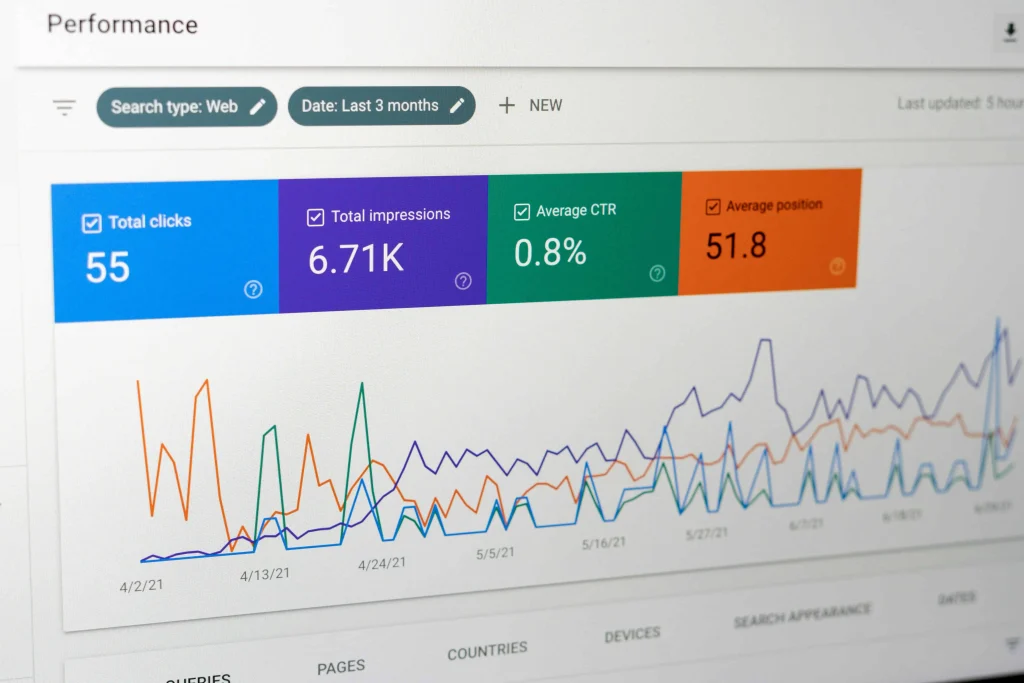
- Organic traffic
- Search impressions
- Click-through rate
- Keyword visibility
- Organic leads
- Conversion rate
- Engagement
- Revenue from organic traffic
Don’t judge your entire SEO strategy based on one keyword position.
A page ranking for a keyword is useful, but the larger goal is to attract the right people and encourage them to take meaningful actions.

Common SEO Mistakes to Avoid
Keyword Stuffing
Repeating keywords excessively can make content unnatural.
Use keywords where they make sense and focus on answering the reader’s question.
Thin Content
Don’t create dozens of pages with little useful information simply to target keywords.
Each important page should provide genuine value.
Ignoring Technical Problems
Broken links, indexing issues, slow pages, and mobile usability problems can weaken the overall website experience.
Focusing Only on Rankings
Ranking is not the final business goal.
Traffic, leads, inquiries, sales, and customer engagement matter too.
Forgetting UX
A visitor may find your website through Google but leave if the website is confusing, slow, or difficult to navigate.
SEO and UX should work together.
A Simple SEO Strategy for Business Websites
If you’re starting SEO from scratch, follow this process.
Step 1: Define Your Business Goals
Decide what you want SEO to achieve.
For example:
- More service inquiries
- More organic visitors
- More leads
- Better visibility
- More online sales
Step 2: Understand Your Audience
Research your customers’ problems, questions, and search behavior.
Step 3: Research Keywords
Find relevant keywords and group them according to search intent.
Step 4: Optimize Existing Pages
Improve titles, headings, content, URLs, images, internal links, and technical elements.
Step 5: Create Helpful Content
Publish articles that answer questions your target audience actually asks.
Step 6: Build Authority
Earn relevant backlinks and mentions by creating useful content and building professional relationships.
Step 7: Measure Results
Review your performance regularly and improve pages based on data.
Service CTA: If your website needs a stronger foundation, I can help with WordPress development, technical SEO, on-page optimization, and UI/UX improvements to create a website that works for both search engines and visitors.
SEO Beginner Guide: Where Should You Start?
If you’re completely new to SEO, don’t try to implement everything at once.
Start with five priorities:
- Make sure search engines can crawl and index your important pages.
- Create dedicated pages for your main services.
- Research relevant keywords and search intent.
- Improve website speed and mobile usability.
- Publish useful content consistently.
Once these fundamentals are working, you can move into more advanced areas such as structured data, content clusters, advanced technical SEO, digital PR, and conversion optimization.
The key lesson from any SEO beginner guide is that SEO is a process, not a one-time task.
Frequently Asked Questions
How long does SEO take to work?
SEO timelines vary depending on competition, website authority, technical condition, content quality, and the market you’re targeting. Some improvements may appear relatively quickly, while meaningful organic growth generally requires consistent effort.
Is SEO important for small businesses?
Yes. SEO can help small businesses reach people who are actively searching for their products or services. A focused strategy can target relevant searches without trying to compete for every broad keyword.
Can I do SEO myself?
Yes. Many basic SEO tasks can be learned and implemented yourself. However, technical SEO, keyword research, content strategy, and larger website optimization projects can benefit from professional experience.
Does web design affect SEO?
Yes. Website structure, mobile responsiveness, navigation, page speed, accessibility, and user experience can all influence how effectively visitors and search engines interact with your website.
Should SEO be done before or after website development?
Ideally, SEO should be considered during website development. Building a clean structure, fast performance, mobile responsiveness, and appropriate page architecture from the beginning can prevent many SEO problems later.
Conclusion
SEO for business websites is about much more than placing keywords on webpages.
It is about creating a website that search engines can understand and visitors can trust.
A strong strategy combines keyword research, useful content, technical SEO, mobile optimization, internal linking, website performance, user experience, and ongoing measurement.
Whether you’re building a website for a startup, service business, local company, or personal brand, the fundamentals remain the same: understand your audience, create genuinely useful content, build a technically strong website, and continually improve it.
For WordPress websites in particular, SEO should be considered during development rather than added as an afterthought.
If you’re planning a new website or want to improve an existing one, I can help with WordPress development, SEO, and UI/UX design to build a website that is fast, user-friendly, and ready for long-term growth.
If you are planning to build a professional website, you have probably heard the term WordPress development. But what does it actually mean, and how is it different from simply creating a website with WordPress?
In simple terms, WordPress development is the process of building, customizing, improving, and maintaining websites using the WordPress platform. It can range from creating a simple business website to developing a complex eCommerce store or a fully customized web application.
For founders, startups, and service businesses, understanding what is WordPress development can help you make better decisions about your website, technology, design, SEO, and long-term growth.
A well-developed WordPress website should do more than look professional. It should load quickly, work smoothly across devices, provide a good user experience, support search engine optimization, and make it easy for your team to manage content.
At mshoaib.site, we approach WordPress development with these goals in mind: creating websites that are visually professional, technically sound, user-friendly, and built around business objectives.
If you are planning a new website or considering improvements to an existing one, start by identifying your business goals, target audience, and most important website functions. A clear plan makes the development process much more effective.
What Is WordPress Development?
WordPress development involves designing, building, customizing, and maintaining websites using WordPress.
WordPress started primarily as a blogging platform, but it has evolved into a flexible content management system (CMS) used for many different types of websites.
WordPress development can include:
- Website design and development
- Custom WordPress themes
- Theme customization
- Plugin development and customization
- WooCommerce development
- Custom post types and taxonomies
- API integrations
- Website performance optimization
- Responsive development
- Technical SEO implementation
- Security and maintenance
- Conversion-focused UI/UX improvements
The complexity depends on the requirements of the business.
A small consulting company may only need a professional five-page website. An online retailer, membership platform, or large organization may require considerably more customization.
WordPress Development vs. Website Building
Using WordPress does not automatically mean that a website has been professionally developed.
A website can be created using an existing theme, page builder, and plugins with relatively little technical customization.
Professional development becomes particularly important when a business needs:
- Custom functionality
- Unique designs
- Third-party integrations
- Advanced forms
- Dynamic content
- Improved performance
- Custom user experiences
- Scalable website architecture
The goal is not simply to add more code. The goal is to create the right technical solution for the business.
How Does WordPress Website Development Work?
A professional WordPress website development project generally follows several stages.
1. Discovery and Planning
Development should begin before anyone starts building pages.
The first step is understanding the business, audience, competitors, goals, and required functionality.
Important questions include:
- Who is the target audience?
- What should visitors do on the website?
- What services or products need to be promoted?
- What pages are required?
- Does the website need eCommerce functionality?
- Are there third-party systems that need integration?
- What SEO goals should the website support?
This stage establishes the foundation for the project.
2. UI/UX Design
The next step is planning how the website will look and work.
UI focuses on the visual interface, including:
- Typography
- Colors
- Buttons
- Spacing
- Layouts
- Images
- Navigation
UX focuses on how easily visitors can navigate the website and complete important actions.
For example, a service business may want visitors to quickly understand its services and submit an inquiry. The website structure should make that journey straightforward.
3. WordPress Development
Once the design and structure are established, development begins.
Depending on the project, developers may work with:
- WordPress themes
- Child themes
- Plugins
- Elementor or other page builders
- WooCommerce
- Custom PHP
- HTML, CSS, and JavaScript
- Custom fields
- APIs
A professional developer selects the appropriate approach based on the project’s requirements rather than relying on unnecessary plugins or complicated solutions.
4. Content Implementation
Content is then added to the website.
This includes:
- Page copy
- Images
- Blog posts
- Service information
- Product details
- Calls to action
- Contact information
Content should be structured around both users and search engines.
5. Testing and Optimization
Before launch, the website should be tested across different devices and browsers.
Important checks include:
- Mobile responsiveness
- Page speed
- Navigation
- Forms
- Links
- Images
- Security
- Browser compatibility
- SEO elements
- Accessibility
A website that looks good on a developer’s computer may still have problems on mobile devices. Thorough testing helps identify those issues before visitors encounter them.
Why Is WordPress Popular for Business Websites?
WordPress for business websites can be a practical solution because it combines flexibility with relatively easy content management.
Business owners can update pages, publish articles, add images, and manage website content without needing to modify the underlying code every time.
Other advantages include:
Flexible Website Design
WordPress can support many types of designs and layouts.
A business can use an existing theme, customize a professional design, or develop a more unique solution.
Scalable Functionality
Businesses can start with a relatively simple website and add functionality as their needs change.
For example, a company could initially launch a service website and later add:
- Online payments
- WooCommerce
- Booking functionality
- Membership features
- Customer portals
- Advanced forms
- Marketing integrations
Content Management
WordPress makes publishing and managing content relatively straightforward.
This is especially useful for businesses investing in content marketing and SEO.
SEO-Friendly Foundation
WordPress provides a foundation that can support technical and on-page SEO when properly configured.
However, installing WordPress alone does not guarantee search visibility.
Website structure, content quality, page speed, internal linking, metadata, schema, mobile usability, and many other factors still matter.

What Are WordPress Development Services?
WordPress development services cover the technical work required to build, customize, optimize, and maintain WordPress websites.
The exact services vary between agencies, but commonly include:
Custom WordPress Development
Custom development can create functionality specifically around a company’s requirements.
This can be useful when an off-the-shelf theme or plugin cannot provide the desired experience.
WordPress Theme Development
A developer can create or customize themes to achieve a specific visual design and website structure.
WooCommerce Development
For businesses selling products online, WooCommerce can be used to create an eCommerce experience within WordPress.
Development may include product configuration, checkout customization, payment integration, shipping functionality, and performance optimization.
WordPress Plugin Development
Plugins extend WordPress functionality.
Businesses may require custom plugins when they need functionality that is not available through existing solutions.
Website Maintenance
WordPress websites require ongoing attention.
Maintenance can include:
- WordPress updates
- Plugin updates
- Security monitoring
- Backups
- Performance checks
- Bug fixes
- Content updates
Regular maintenance helps reduce technical problems and keeps the website operating effectively.
How WordPress Development Supports SEO
Development and SEO should not be treated as completely separate activities.
Technical decisions made during development can affect how search engines crawl, understand, and index a website.
A well-developed WordPress website should consider:
- Clean website architecture
- Fast loading times
- Mobile responsiveness
- Search-friendly URLs
- Proper heading structure
- Image optimization
- Internal linking
- XML sitemaps
- Canonical URLs
- Metadata
- Structured data where appropriate

For example, adding hundreds of unnecessary plugins can create performance and maintenance issues. Similarly, a visually impressive website can struggle with search visibility if its content structure is poorly planned.
If your WordPress website looks good but is not generating enough organic traffic, the issue may involve more than content. mshoaib.site can help evaluate your WordPress development, technical SEO, website structure, and user experience to identify practical improvements.
WordPress Development and UI/UX Design
Development and design work best when they are planned together.
A website may have excellent functionality but still perform poorly if visitors find it confusing or difficult to use.
Good UI/UX design considers:
- Clear navigation
- Readable typography
- Strong visual hierarchy
- Consistent design elements
- Mobile usability
- Accessible interactions
- Clear calls to action
For a service business, the visitor should quickly understand what the company does, who it serves, and what action they can take next.
For an eCommerce website, the experience should make it easy to discover products, understand pricing, and complete checkout.
The technology should support the experience rather than getting in the way.
Practical Tips for Better WordPress Development
Whether you are launching a new website or improving an existing one, these practices can make a significant difference.
Keep the Website Structure Simple
Organize pages logically.
Visitors should not need to click through several unnecessary pages to find important information.
Use Plugins Carefully
Plugins can add valuable functionality, but installing too many can create unnecessary complexity.
Before adding a plugin, consider whether the functionality is actually required and whether another existing solution can accomplish the same goal.
Prioritize Mobile Users
Your website should work properly on smartphones and tablets, not just desktop screens.
Check:
- Text size
- Buttons
- Navigation
- Forms
- Images
- Spacing
- Page speed
Optimize Images
Large images can significantly affect loading performance.
Use appropriately sized images and modern formats where suitable, while maintaining acceptable visual quality.
Build With SEO in Mind
Do not wait until after launch to think about SEO.
Plan page structure, headings, URLs, internal links, content, and technical requirements during development.
Make Calls to Action Clear
Every important page should have an obvious next step.
Depending on the business, that could be:
- Request a quote
- Contact the company
- Book a consultation
- Buy a product
- Download a resource
- Submit an inquiry
When Should You Hire a WordPress Development Agency?
A DIY WordPress website may be suitable for a simple project. However, professional development becomes more valuable as requirements become more complex.
Consider working with a development agency when you need:
- A custom website design
- Advanced functionality
- WooCommerce development
- API integrations
- Website migrations
- Performance optimization
- Technical SEO
- Ongoing maintenance
- Conversion-focused UX
- A scalable website architecture
An experienced agency can also help connect different parts of the project.
For example, UI/UX decisions can influence development, development can influence technical SEO, and SEO can influence website architecture and content structure.
If you are planning a new website, rebuilding an outdated WordPress site, or adding new functionality, mshoaib.site can help you turn your requirements into a practical website strategy—from UI/UX and development to SEO and ongoing optimization.
Frequently Asked Questions
What is WordPress development?
WordPress development is the process of building, customizing, optimizing, and maintaining websites using WordPress. It can include themes, plugins, custom functionality, WooCommerce, integrations, performance, and technical SEO.
Is WordPress good for business websites?
Yes. WordPress can support many types of business websites, from small service websites to larger content-driven platforms and eCommerce stores. The quality of the final website depends heavily on its design, development, content, and ongoing maintenance.
What is the difference between WordPress design and development?
WordPress design focuses primarily on the visual appearance and user experience of a website. Development focuses on implementing the design, functionality, integrations, database structures, and technical behavior.
Do I need a developer for WordPress?
Not necessarily. Simple websites can often be created using existing themes and plugins. A developer becomes particularly useful when you need custom functionality, integrations, performance optimization, advanced WooCommerce features, or a unique design.
How much does WordPress development cost?
The cost varies significantly depending on the website’s size, design requirements, functionality, integrations, content, and ongoing support requirements. A simple business website and a custom eCommerce platform can have very different development costs.
Conclusion: Building a WordPress Website That Supports Your Business
Understanding what is WordPress development is the first step toward making better decisions about your website.
WordPress development goes beyond installing WordPress and selecting a theme. It can involve planning the website architecture, designing the user experience, developing custom functionality, optimizing performance, implementing SEO, and maintaining the website over time.
For businesses, the objective should be to create a website that supports real business goals.
That means making it easy for customers to understand your services, navigate your website, find useful information, contact your team, and take action.
Whether you need a new WordPress website development project, improvements to an existing website, technical SEO, or UI/UX design, the right strategy can turn your website from a simple online presence into a valuable business asset.
Ready to improve your WordPress presence? Explore how mshoaib.site can help with WordPress development, SEO, and UI/UX design to create a website that is built around your business goals.